As a founding member of the University Think Tank Alliance for China's Major Regional Development Strategies, our College, together with the Institute of China Development Strategy and Planning, co-hosted the National Major Regional Development Strategy Symposium and the Sixth Annual Meeting of the University Think Tank Alliance for China’s Major Regional Development Strategies at Wuhan University on March 21, 2026.
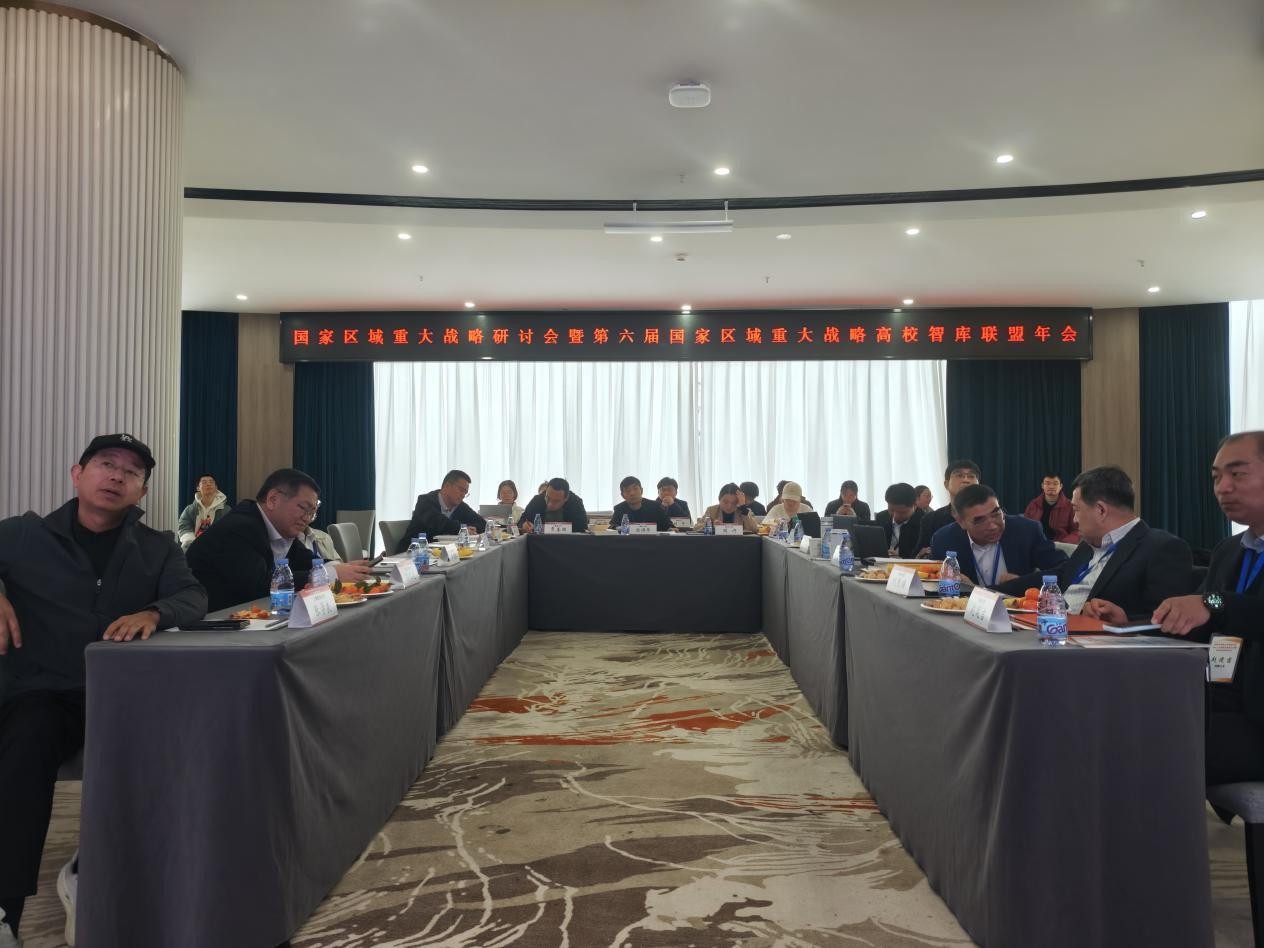
More than twenty scholars and experts from alliance member institutions participated in the symposium, including representatives from Nankai University, Peking University, Renmin University of China, Wuhan University, Lanzhou University, Zhejiang University, Jinan University, Central University of Finance and Economics, Shanghai University of Finance and Economics, Dongbei University of Finance and Economics, and Sichuan University.
Participants engaged in in-depth discussions on a wide range of topics, including:
The development of a theoretical framework for China’s major regional development strategies;
The construction of industrial innovation centers and world-class urban agglomerations in the Beijing-Tianjin-Hebei region, the Yangtze River Delta, the Guangdong-Hong Kong-Macao Greater Bay Area, the Yellow River Basin, and the Middle Reaches of the Yangtze River region;
Advancing the comprehensive revitalization of Northeast China;
Promoting the large-scale development of Western China.
The Chairman of the Alliance and Dean of the College of Economic and Social Development, Binglian Liu, delivered the opening remarks. He reviewed the Alliance’s accomplishments over the past year and outlined its priorities for the coming year.
During the thematic presentation session, Professor Liu delivered a keynote speech entitled “AI + Large Regional Economic Models.” He emphasized that artificial intelligence will have a profound impact on regional economics research and will serve as a powerful catalyst for the development of policy think tanks. He also introduced Nankai University’s exploratory efforts in developing large-scale regional economic models and announced that related research outcomes would be shared openly with Alliance member institutions.
The Alliance also formally admitted two new member institutions:
With the addition of these two distinguished research institutes, the Alliance has expanded to a total of 13 member institutions, further strengthening its academic and policy research network.
Gui Zhang, Secretary-General of the College for Beijing-Tianjin-Hebei Coordinated Development, also participated in the symposium.
The event provided an important platform for academic exchange and policy dialogue, further advancing collaborative research and think tank development in support of China’s major regional development strategies.